
Royal Caribbean Takes on Sargassum Blooms Ahead of Perfect Day Mexico
If you’ve sailed to Mexico in the summer months in recent years, you’ve likely run into a growing problem in the area: sargassum. This thick, matted seaweed has become a plague along the Yucatan Peninsula in recent years. Now, in preparation for their new destination Perfect Day Mexico, which is scheduled to open in 2027, Royal Caribbean International has invested in sargassum control measures.
What Is Sargassum and Why Is It Getting Worse?
Sargassum has been spreading rapidly in recent years. Fed by warming ocean temperatures and nutrient-rich runoff from land, these seaweed blooms have started ruining beaches across the Mexican coast. The problem is typically worst from March to October, which unfortunately coincides with peak vacation season in the region.
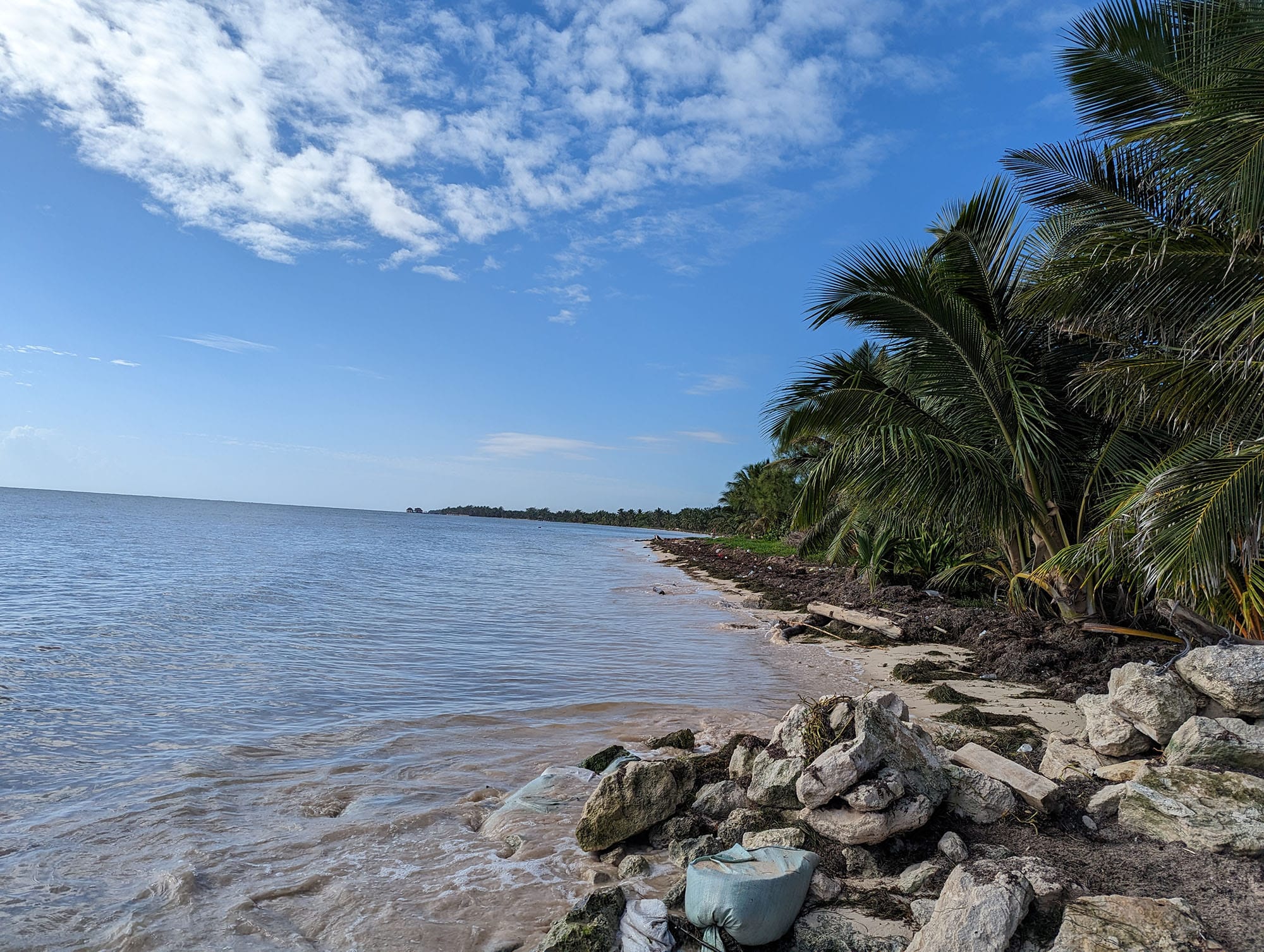
According to the University of South Florida’s College of Marine Science, 2026 is shaping up to be a record year for sargassum, with 1.7 million tons detected in January alone.
When sargassum washes ashore, it blankets beaches in dark brown piles of seaweed. The issue goes beyond appearance. As the plants break down, they release hydrogen sulfide into the air, creating a smell similar to rotten eggs that can spread across entire beachfront areas.
Most resorts in the region employ staff who constantly rake and remove the sargassum from the beaches. However, during large blooms, it can be difficult to keep up.
Royal Caribbean’s Plan to Control Sargassum Near Perfect Day Mexico

The increase in sargassum is especially concerning for Royal Caribbean’s new Perfect Day Mexico project, which is expected to feature long stretches of pristine beaches. To help address the issue, the company recently announced a multi-year commitment to strengthen sargassum protection and removal efforts across the local community of Mahahual in Quintana Roo.
Royal Caribbean has formed a partnership with residents, environmental specialists, local businesses, and the Mexican Navy to create a working group focused on identifying the best solutions.
One effort will involve working with the Mexican Navy to reinforce ocean net systems designed to prevent sargassum blooms from reaching the beaches. The cruise line will also deploy seaweed skimming equipment that removes floating sargassum while it is still offshore.
The plans also include developing a long-term automated collection system. This low-noise, low environmental-impact technology would collect sargassum directly from the water before it reaches the shore.
Collecting the seaweed offshore has another benefit. Because it is gathered before reaching land, it contains less sand, debris, and trash. That makes it significantly easier to compost and reuse.
With these measures in place, hopefully it improves not only the experience at Royal Caribbean’s new private destination, but all the beaches used and enjoyed by the local community.
Want to Stay Up on Royal Caribbean and Other Cruise News?
Follow us on Facebook, Instagram, Threads, or subscribe to our monthly newsletter.
CruiseSpotlight is an Amazon Associate. We may earn a commission when you click links to retailers and purchase goods.


