
Royal Caribbean’s Waterslides: When Does a Broken Feature Become a Broken Promise?
Over the past few months, Royal Caribbean has been facing growing criticism from guests over an issue that keeps popping up across multiple ships: broken or closed waterslides.
What started as scattered complaints has turned into something more noticeable. Social media posts, cruise forums, and even coverage from news outlets are all pointing to the same thing. Guests are boarding ships expecting one experience and getting something else.
This difference is even more noticeable on the newer Icon Class ships, where ticket prices are at record levels.
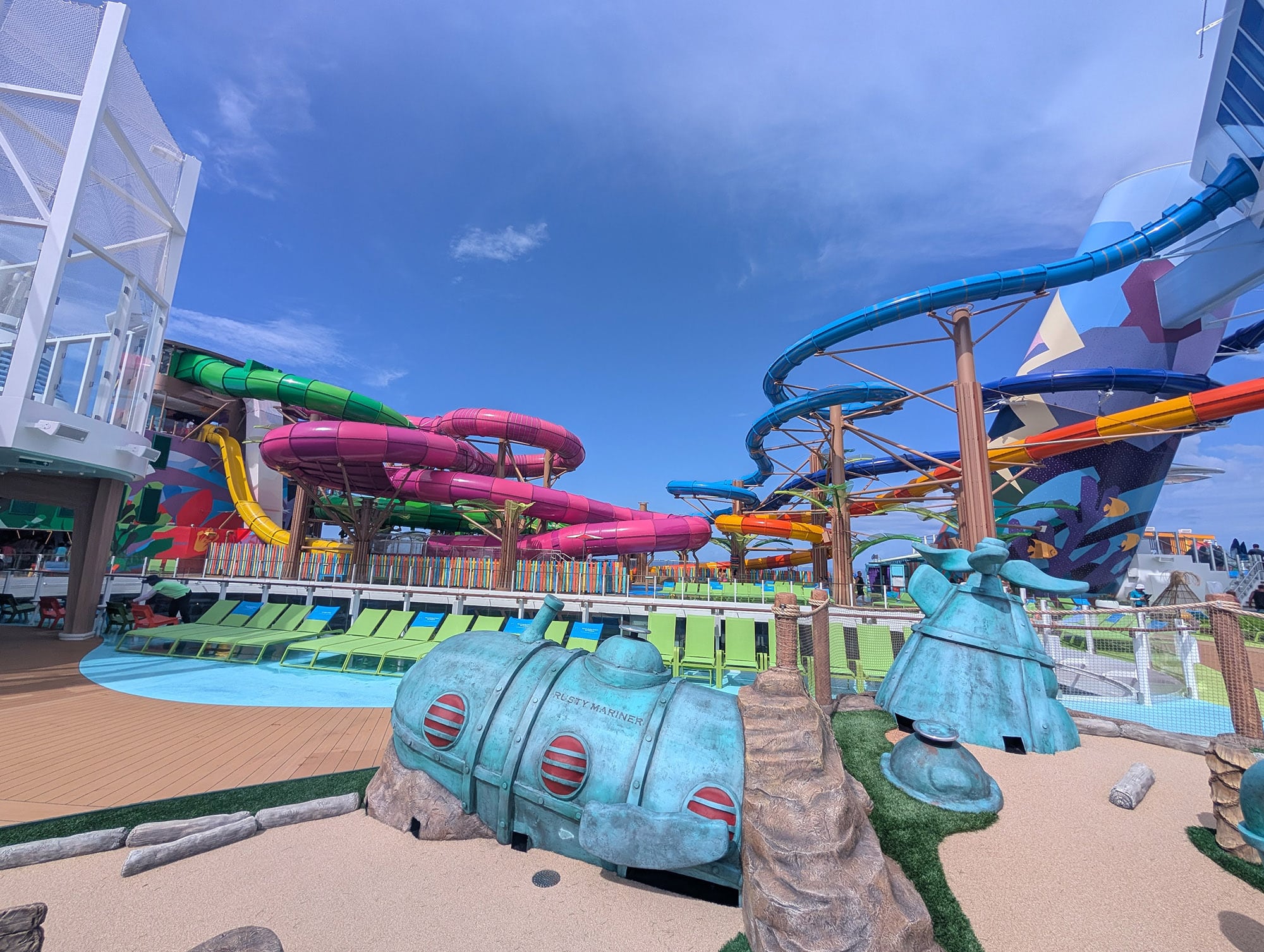
At What Point Is Royal Not Delivering What They Promise?
Usually, a broken waterslide isn’t a major problem. Cruise ships have plenty of other activities, and most people understand that things sometimes break. But this isn’t just any waterslide.
On ships like Icon of the Seas, the Category 6 waterpark isn’t a side attraction. It’s the centerpiece. Royal Caribbean has built entire marketing campaigns around it, promoting it as the “largest waterpark at sea.” It’s front and center on their website, in ads, and across their promotional materials.
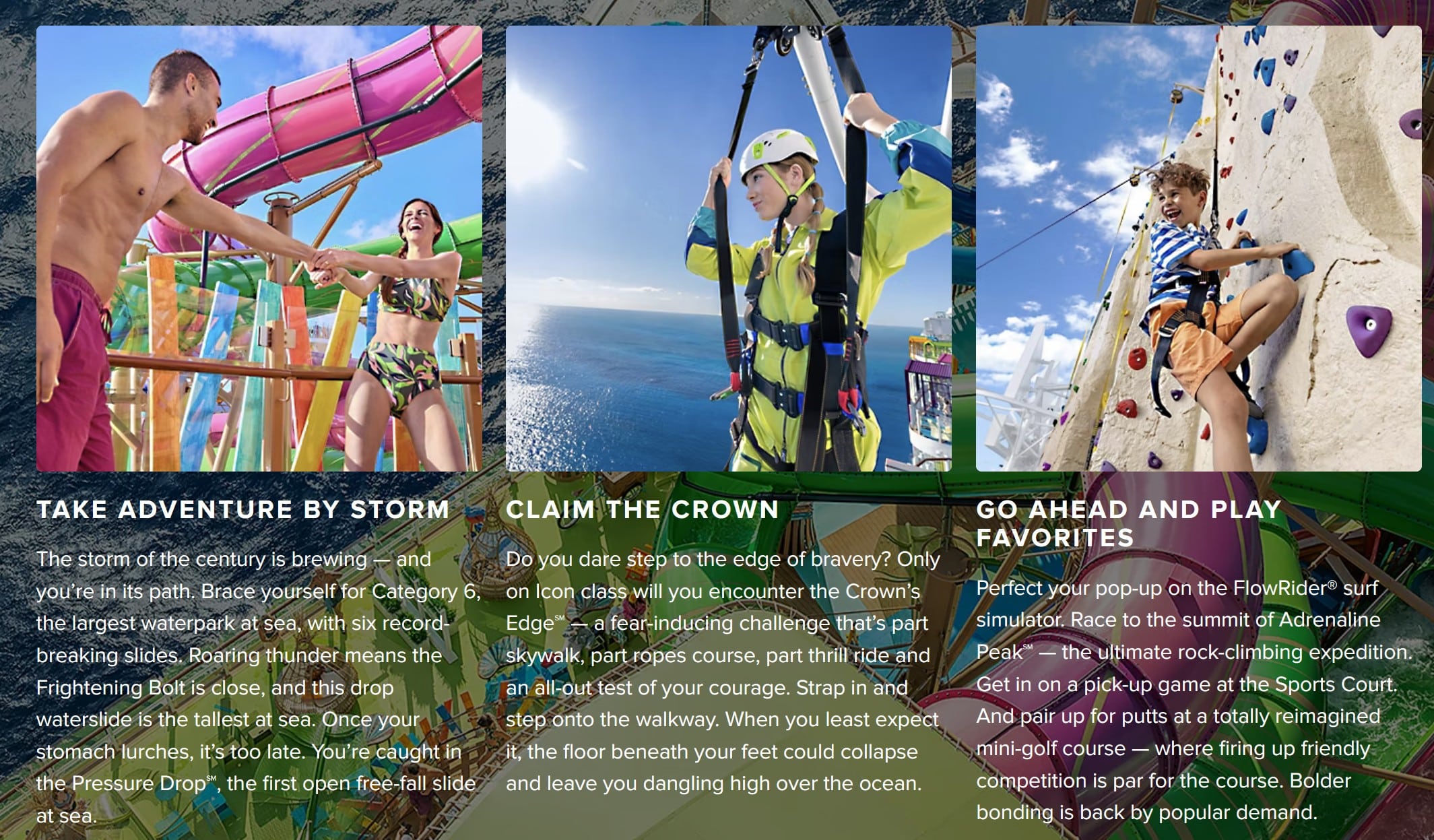
At the same time, these ships come with record pricing. Royal Caribbean is charging more than ever before, and reporting strong financial performance to match.
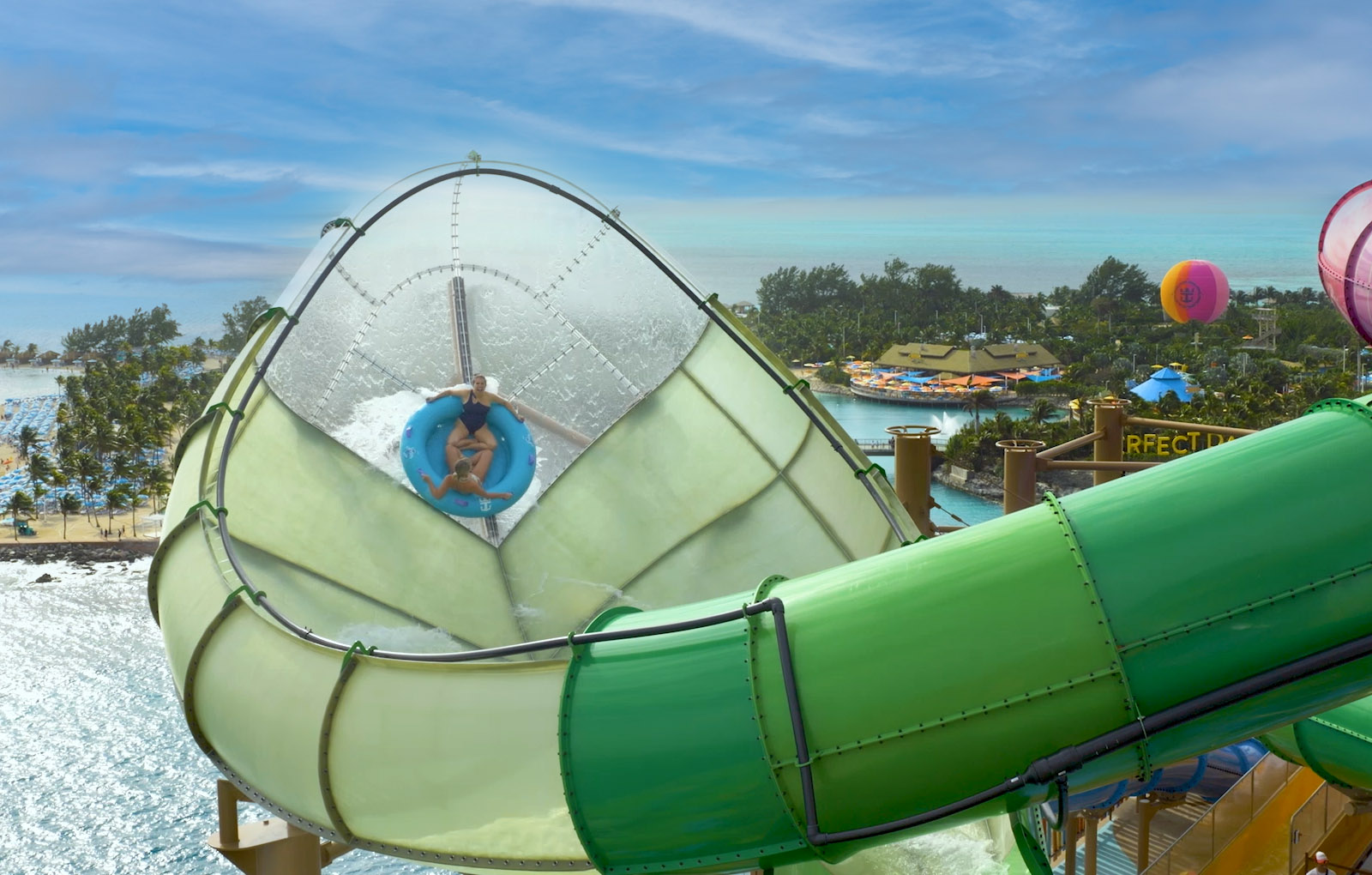
So when guests board and find that multiple slides are closed, it raises a fair question: At what point does this cross from routine maintenance into not delivering the experience that was sold?
Legally, the answer is clear. Cruise contracts are written to protect the cruise line, and they explicitly state that onboard features can change without compensation. But legality and fairness are not the same thing. If a major attraction is heavily marketed and helps justify the price, should guests simply accept it being unavailable?
To put it in perspective, imagine visiting Magic Kingdom at Disney World and finding a major land like Fantasyland closed for the day. The park is still open. There’s still plenty to do. But a core part of what was advertised is missing. Guests would almost never receive a discount or refund for that.
What’s Actually Going On With the Waterslides?
Royal Caribbean hasn’t publicly provided a detailed explanation for the widespread slide closures. However, one incident may have triggered this issue.
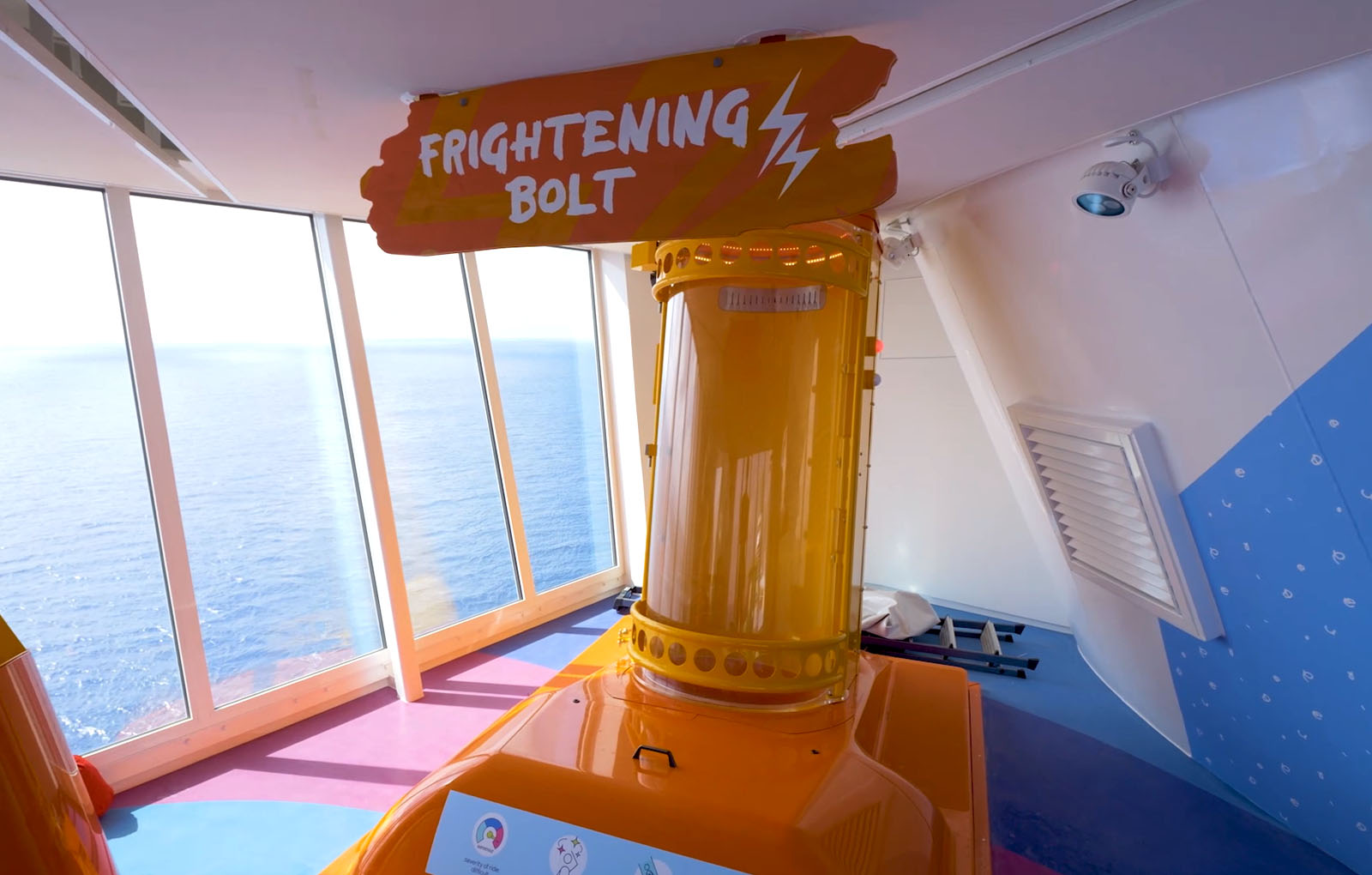
In August 2025, a guest aboard Icon of the Seas was reportedly injured when a clear acrylic section of the “Frightening Bolt” slide cracked during use. The slide was immediately shut down, and the slide was also closed on Star of the Seas.
Since then, guests across multiple ships have reported that clear slide sections are being removed or kept closed across the fleet. In some cases, these closures haven’t just lasted for a sailing or two, but for months.
That suggests something larger beyond routine maintenance. It points to a potential design, safety, or liability concern that hasn’t been fully addressed publicly.
Is Royal Caribbean Playing It Too Safe?
Other cruise lines, including Norwegian Cruise Line and MSC Cruises, have used similar clear acrylic slide elements for years without widely reported issues. So is Royal Caribbean dealing with a unique problem? Or are they taking a more conservative approach after a single high-profile incident?

Something like that has happened before. The SkyPad, a virtual reality trampoline attraction, was quietly removed from ships after an accident and subsequent lawsuit. While it was never officially stated that this was the reason, the outcome was the same: a headline attraction disappeared.
The Bigger Issue: Expectations vs. Reality
The real controversy here isn’t just broken waterslides. It’s the growing gap between what’s being marketed and what guests are getting.
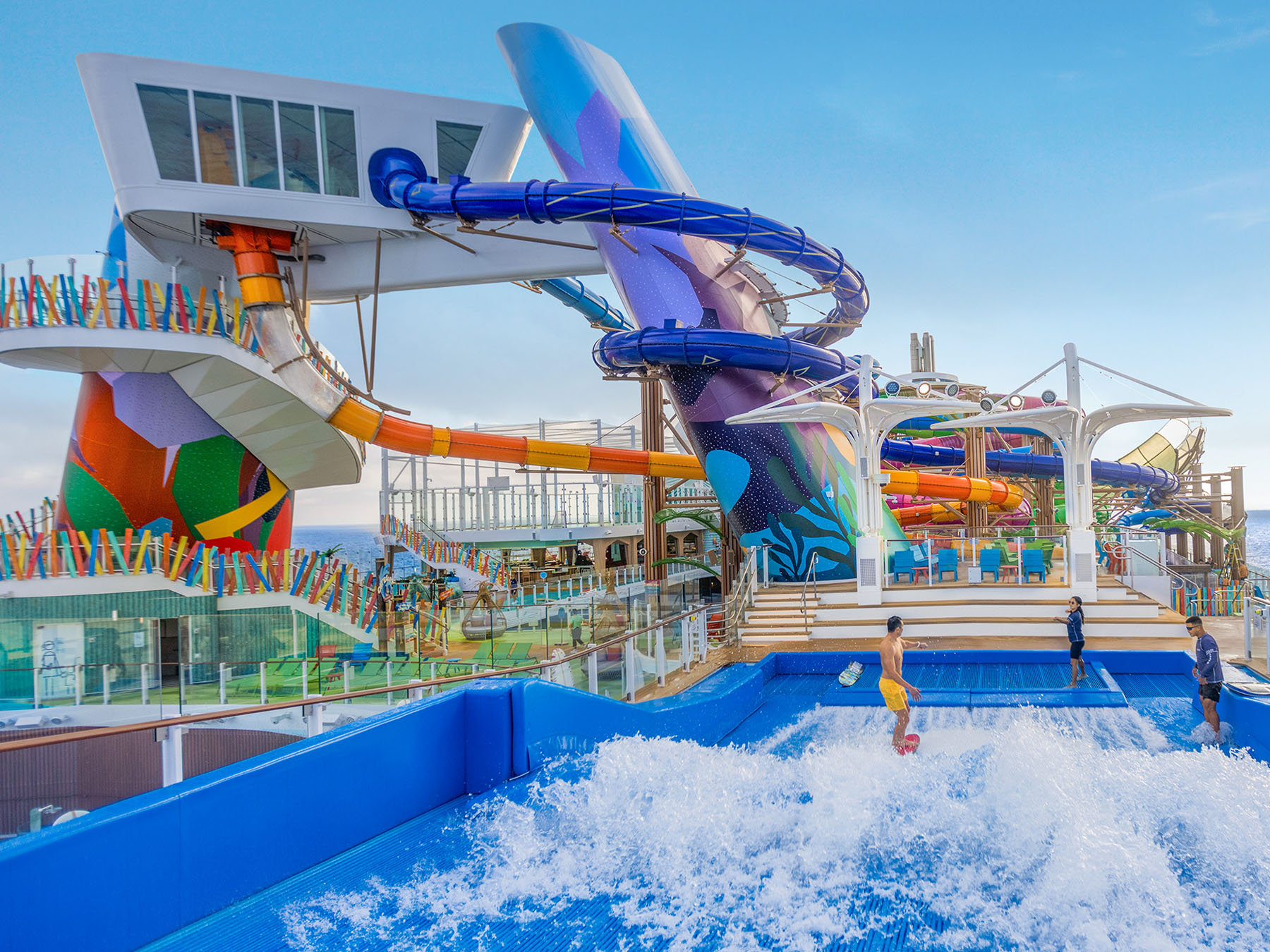
Royal Caribbean is positioning ships like Icon of the Seas as next-generation with one-of-a-kind features and pricing them accordingly. When key attractions are unavailable, even for legitimate reasons, it chips away at that value.
Most guests won’t cancel a cruise over a closed slide, but they will remember it. And as more people share those experiences publicly, it raises a bigger question for the industry: How much of the onboard experience needs to be operational before what’s being sold no longer matches what’s being delivered?
Want to Stay Up-to-date on Royal Caribbean and Other Cruise News?
Follow us on Facebook, Instagram, Threads, or subscribe to our monthly newsletter.
CruiseSpotlight is an Amazon Associate. We may earn a commission when you click links to retailers and purchase goods.


